
Posted by Myth Medieval Celtic LLC,THE WIZARDS HAT on Dec 4th 2025
Full Supermoon Blessings, Cold Moon or "Moon Before Yule"
Why December’s Full Moon is a Supermoon and Called the Cold Moon
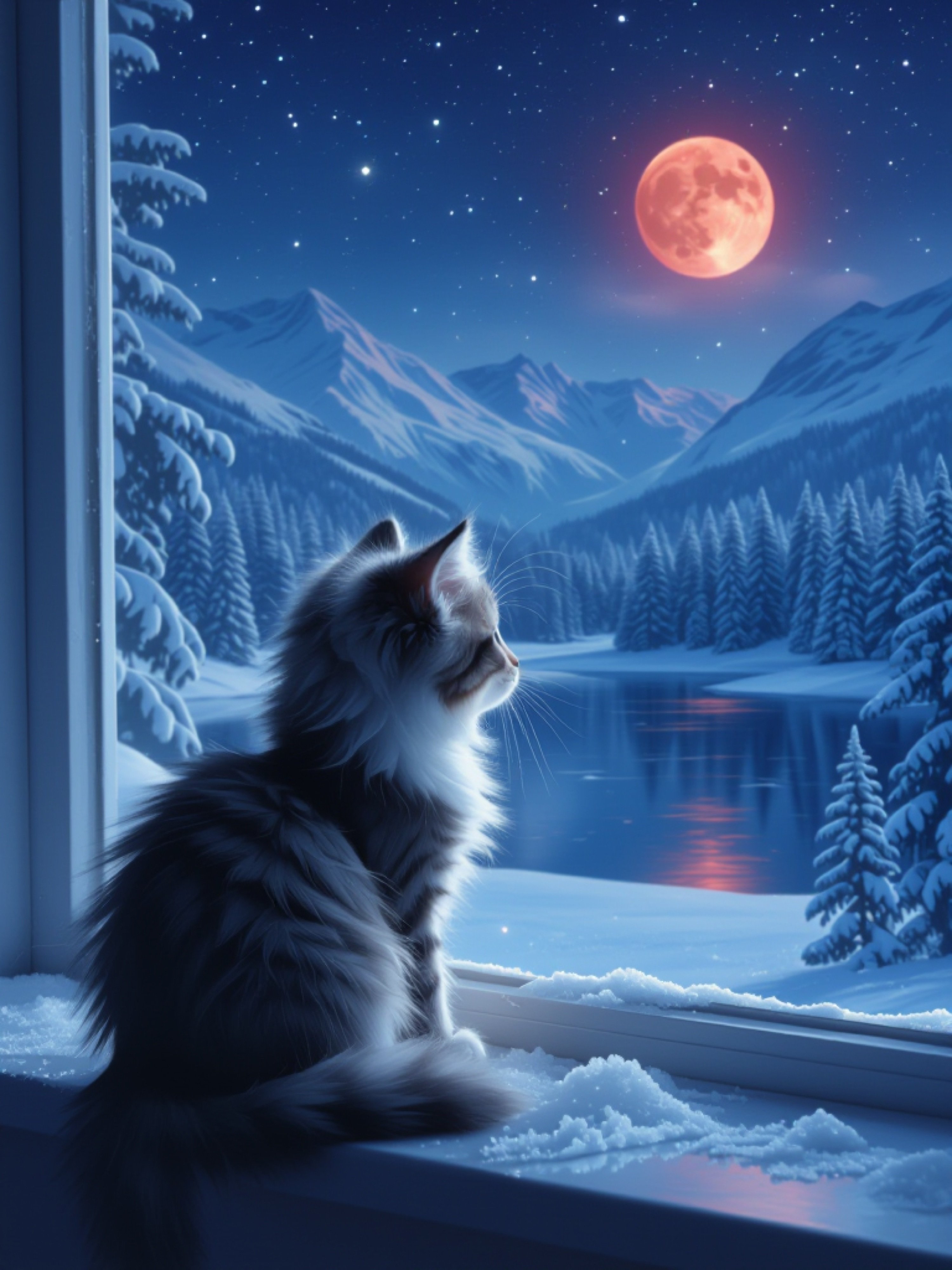
Full Supermoon Blessings, Cold Moon
- Thursday, Dec. 4 — 6:14 p.m. — Cold Moon*
Thursday, December 4
The Moon reaches perigee, the closest point to Earth in its orbit, at 6:07 A.M. EST, when it stands 221,806 miles (356,962 kilometers) away. Some 12 hours later, Full Moon occurs at 6:14 P.M. EST, bringing us the December Cold Moon.
Because this Full Moon occurs when the Moon is near its closest point to Earth, it is classified as a Super Moon, closing out the year as the third in a series of four Super Moons that began in October. According to the late astronomer Fred Espenak’s AstroPixels website, the next Super Moon will be January 3, 2026, followed by a lull until November 2026. (Note, however, that the definition of Super Moon can differ between resources; for example, the Royal Observatories Greenwich doesn’t consider January or November 2026’s Full Moons close enough to Earth to be called Super Moons. Instead, this institution classifies December 2026’s Full Moon as the next Super Moon after today.)
With the Moon so big and bright in the sky, it makes for a prime target with a telescope. Look toward Luna’s western edge for the dark, round spot of the crater Grimaldi. Spanning some 107 miles (173 km) and sinking 1.7 miles (2.7 km) deep, Grimaldi appears at first glance to have a flat, dark floor of uniform gray. But look closer, and you’ll notice color variations in the shading, as well as streaks of lighter ejecta thrown across the crater by later impacts. Also compare Grimaldi’s smooth floor to that of Riccioli to its east. The latter’s floor is much rougher, as it is too far from Oceanus Procellarum to have been flooded with lava from this source.
Sunrise: 7:06 A.M.
Sunset: 4:34 P.M.
Moonrise: 4:03 P.M.
Moonset: 6:57 A.M.
Moon Phase: Full
The December full Moon is a supermoon, the third in a series of three consecutive supermoons at the end of 2025 (October, November, December). A supermoon occurs when the Moon is at its closest point to Earth in its orbit, called perigee.
Because it’s a supermoon, it may appear slightly larger and brighter than a typical full Moon—up to 8% larger in diameter and 16% brighter. For most casual observers, the difference is subtle, but it’s more noticeable if compared to a micromoon, when the Moon is at its farthest point from Earth.
Being near perigee and full, this Moon can also produce slightly higher tides, known as perigean spring tides or king tides, especially along coastlines, though the effect is modest.
This supermoon also comes just before the peak of the Geminid meteor shower (December 13–14), which means exceptionally dark skies for a dazzling display of shooting stars.
The Full Cold Moon
The Moon names we use in The Old Farmer’s Almanac come from centuries of Native American, colonial, and European traditions. December’s Full Moon is most commonly called the Cold Moon (Mohawk), reflecting the frigid season. It is also known as the Long Night Moon (Mohican) because it rises during the longest nights of the year, near the winter solstice, and remains above the horizon for an extended period.
In Europe, ancient pagans called it the “Moon Before Yule” in honor of the Yuletide festival celebrating the return of the sun.
Other traditional names that highlight the cold and snow include:
- Drift Clearing Moon (Cree)
- Frost Exploding Trees Moon (Cree)
- Moon of the Popping Trees (Oglala)
- Hoar Frost Moon (Cree)
- Snow Moon (Haida, Cherokee)
- Winter Maker Moon (Western Abenaki)
- Moon When the Deer Shed Their Antlers (Dakota)
- Little Spirit Moon (Anishinaabe)